Reviewing the Penguin Decorative Laser Cut Template for Embroidery
As a designer who spends half my life digitizing and the other half stitching, I have learned that not every cute graphic translates well into thread. When I first encountered the Penguin Decorative Laser Cut Template, my initial reaction was skepticism mixed with curiosity. The product description highlights its utility for laser cutting and CNC routers, positioning it firmly in the Other Home Decor and Laser Cutting categories. However, experienced crafters know that a clean vector line often makes for an excellent foundation for machine embroidery, provided you approach it with the right mindset.
I decided to put this design through its paces, not as a laser-cut wooden ornament, but as a potential machine embroidery design for a client’s winter collection. Here is my practical assessment of how this asset performs when translated from digital lines to stitched reality.
First Impressions: Mood and Visual Personality
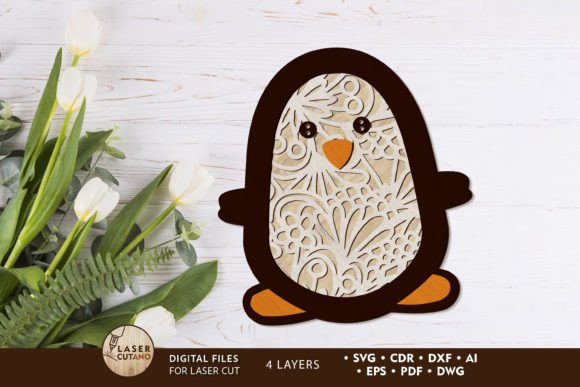
The immediate appeal of the Penguin Decorative Laser Cut Template lies in its simplicity. It avoids the cluttered details that often plague stock graphics, offering a clean, bold silhouette that screams "winter charm" without being overly seasonal. The mood is playful yet sophisticated, making it versatile enough for high-end boutique items or whimsical children’s wear.
For an embroidery project, this clarity is crucial. Complex shapes with tiny, disconnected elements can cause thread breaks and registration issues. This template’s solid, continuous lines suggest that it would digitize beautifully into a combination of satin stitch borders and fill stitch bodies. The visual personality is friendly and approachable, which is exactly what customers look for in a personalized gift or a handmade product.
Real-World Application: From Digital File to Finished Product
To test its viability, I imagined a specific scenario: a custom order for a local coffee shop wanting branded tote bag design options for their holiday merchandise. They needed something that would stand out on canvas but remain durable through frequent washing.
Using the Penguin Decorative Laser Cut Template as a base, I visualized how it would look as an embroidered patch applied to a heavy-duty tote. The bold outlines would hold up well against the textured fabric of canvas. Alternatively, I considered using it for sweatshirt embroidery. On a soft fleece background, the penguin shape could be filled with a dense, plush stitch pattern, creating a tactile experience that enhances the perceived value of the finished product.
This versatility extends to baby embroidery projects as well. A simplified version of this design, scaled down for a onesie or baby blanket, retains its charm without becoming illegible. For Etsy sellers and small shop product creators, having a design that works across multiple categories—from custom apparel to home textiles—is a significant advantage. It allows for consistent branding across different design assets and reduces the need to purchase separate files for different applications.
Navigating Technical Challenges and Fabric Constraints
While the design is promising, it is not without its pitfalls. Because the original file is prepared for Laser Cutting, it lacks the inherent compensation for thread pull and fabric distortion that a native embroidery file would have. If you plan to use this template for embroidery, you must be mindful of several factors.
First, consider the hoop size. If you are working with a small 4x4 inch hoop, you may need to simplify the design further to ensure the details do not become lost in the stitching. Tiny corners and sharp angles, common in laser-cut vectors, can be problematic in embroidery. They often require careful underlay stitching to prevent puckering.
Fabric choice is equally critical. On stretchy fabric like jersey knits, the density of the fill stitches must be carefully managed to prevent the garment from warping. I recommend using a cut-away stabilizer for these materials to provide long-term support. Conversely, on thin fabrics, a dense fill stitch might cause visible perforation or stiffness. In such cases, considering an applique design approach—where the penguin shape is cut from fabric and then stitched down—might yield a cleaner, more professional result.
Dark fabrics present another challenge. The thread colors must have sufficient contrast to make the design pop. A black penguin on a navy sweatshirt will disappear. Always test your thread color combinations on scrap fabric before committing to the final piece. This is especially important for commercial embroidery where consistency and quality control are paramount.
Enhancing Brand Value and Customer Trust
Why does this matter for your business? Because the quality of your embroidery project directly impacts customer trust. A well-executed design signals professionalism. When a customer receives a holiday embroidery item that looks crisp and feels substantial, they are more likely to return and recommend your craft business to others.
The Penguin Decorative Laser Cut Template, when used correctly, can elevate your printable mockup presentations. A clean, recognizable shape looks better in digital previews, helping potential buyers visualize the finished product on their own items. This visual clarity can increase buyer engagement and conversion rates for your online listings.
Practical Notes for the Designer
Before you dive in, here are my top recommendations for integrating this template into your workflow:
- Test on Scrap Fabric: Always run a test stitch-out on the same type of fabric you intend to use for the final product. This helps you identify any tension issues or registration errors.
- Check Stitch Density: Since this is not a native embroidery file, you will need to digitize it yourself or hire a digitizer. Pay close attention to stitch density to avoid bulkiness.
- Verify Licensing: The product description mentions it is for laser cut and CNC machines. Ensure you have the rights to use it for commercial embroidery projects. If the license is unclear, contact the seller before selling finished products.
- Mockup in Black and White: Review the design in grayscale to check for contrast and detail visibility. If it looks muddy in black and white, it may lack definition in thread.
- Consider the Underlay: Proper underlay stitching is essential for maintaining the shape of the penguin, especially if you are using satin stitches for the outline.
In conclusion, the Penguin Decorative Laser Cut Template is a versatile asset that, with careful adaptation, can serve as a strong foundation for various embroidery applications. It offers a charming aesthetic that resonates with customers seeking unique, handmade items. By respecting the technical limitations of translating laser-cut vectors into thread, you can create stunning, high-quality products that stand out in a crowded market. Whether you are creating custom apparel, home decor, or gift items, this design has the potential to become a staple in your creative toolkit.