Succulent Laser Cutting Ornaments Review
As a graphic designer who has spent the last decade refining brand identities and preparing files for everything from high-end packaging to local craft fairs, I approach every new graphic design asset with a critical eye. It is not enough for an illustration to look cute; it must perform under pressure. Recently, I evaluated the Decorative Succulent Plant, Decoration for a client project involving a boutique handmade business launching a seasonal home decor line. My goal was to determine if this asset could elevate their brand identity while remaining practical for production.
First Impressions: Mood and Visual Style
The first thing that strikes you about the Decorative Succulent Plant, Decoration is its organic yet structured aesthetic. It captures the trendy, modern design vibe that dominates current creative marketplace offerings without feeling generic. The lines are clean, suggesting a vector-based origin that translates well into various formats. For a client aiming to project freshness, sustainability, and calm, this illustration hits the right emotional notes. It feels grounded and natural, making it an excellent choice for projects targeting eco-conscious consumers or those seeking a touch of botanical elegance in their marketing visuals.
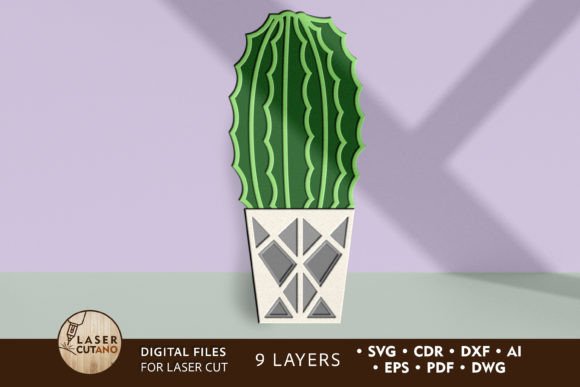
This is not just a simple clipart image; it is a versatile digital product designed with layering in mind. The description notes that these are SUCCULENT Digital multilayer layout files specially prepared for the laser cut, CNC router machine, and other cutting machines. This technical specificity is crucial for designers working in physical product development. It suggests that the asset was created with precision, ensuring that intricate details do not get lost during the manufacturing process.
Performance in Real Design Scenarios
In my review, I tested how this asset performs across different mediums. For packaging design, the succulent motif works beautifully as a central hero graphic on kraft paper boxes or as a subtle decorative accent on product labels. Its organic shape breaks up the rigid geometry of rectangular packaging, adding visual interest without overwhelming the text. When used in social media graphics, particularly for Instagram posts or Pinterest pins, the asset draws the eye effectively. It pairs well with both serif font and sans serif font styles, allowing for flexible typography choices depending on whether the brand voice is traditional or contemporary.
For those involved in print-on-demand or running an Etsy product shop, this asset is a powerhouse. It translates seamlessly into a t-shirt design where the layered look can be simulated with multi-color prints or kept simple for a minimalist aesthetic. As a sticker design, the clear outlines ensure easy die-cutting. I also found it effective in Canva template creations, where users can drag and drop the element to create quick invitations or greeting cards. The versatility extends to sublimation design for mugs and tote bags, where the high-contrast lines remain sharp against colorful backgrounds.
Strategic Placement and Visual Hierarchy
Understanding where to place the Decorative Succulent Plant, Decoration is key to maintaining a strong visual hierarchy. It works best in large layout areas where it can breathe, such as on poster headers, flyer backgrounds, or as a focal point in editorial design. In these contexts, it acts as a anchor, grounding the composition. However, designers must be cautious when using it in crowded layouts. Because the succulent has detailed layers, placing it over busy patterns or low-contrast backgrounds can reduce its impact and confuse the viewer.
I would advise against using this specific asset in strict corporate branding materials that require sterile, minimalist professionalism. It shines in small business branding, lifestyle blogs, and creative campaigns where personality is valued over rigidity. In web design, it serves well as a decorative divider or an icon for sections related to nature, growth, or wellness, but it should not distract from primary call-to-action buttons.
Technical Checks for Professional Use
Before handing off any design assets to a client or sending them to print, I conduct a series of rigorous tests. Here are my practical notes for using this succulent illustration:
- Contrast Testing: Always test the asset in black and white first. If the layers blend together without color, the design may lack definition. Ensure there is sufficient contrast between the succulent and the background, especially for laser cutting applications where depth is created by physical separation rather than ink.
- Scalability: Preview the design at very small sizes, such as on a business card or favicon, and at large sizes, like a banner. Vector formats like SVG are essential here to maintain crisp edges. If using a PNG, check the transparency quality to avoid white halos around the leaves.
- File Format Inspection: Verify if you are receiving an SVG design or a PNG design. For Cricut project users and laser cutter operators, the SVG format is non-negotiable for clean cuts. Ensure the paths are closed and nodes are optimized to prevent machine errors.
- Typography Pairing: Experiment with different typefaces. I found that a handwritten font adds a personal, artisanal touch suitable for handmade business tags, while a bold display font creates a modern, impactful look for sale announcements.
- Licensing Verification: Always confirm the commercial license terms. Since this is intended for commercial design and potential resale in physical forms like ornaments, you must ensure the license covers end-product sales.
Final Verdict for Designers
The Decorative Succulent Plant, Decoration is a robust addition to any designer’s toolkit. It bridges the gap between digital aesthetics and physical production, making it ideal for crafters and professional designers alike. By trying to make your own cactus arrangement with these super easy to use components, you unlock a range of creative possibilities from product mockup enhancements to full-scale design bundle creations.
For brand owners and content creators, this asset offers a quick way to inject warmth and trendiness into their visuals. For publishers and bloggers, it provides a fresh alternative to overused floral motifs. Just remember to respect the technical requirements of your output medium. Whether you are creating marketing visuals for a spring campaign or designing intricate ornaments for holiday sales, this succulent illustration holds up under scrutiny. It is a reliable, stylish, and technically sound choice for modern creative design workflows.