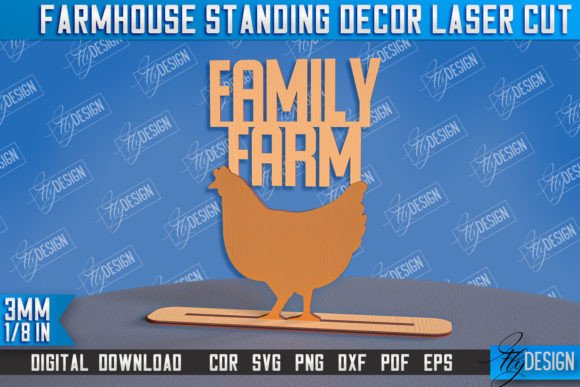
Reviewing the Farmhouse Standing Laser Cut Design
As a designer who spends half my life staring at digitized paths and the other half watching needles punch through fabric, I have learned to be skeptical of files that promise versatility without delivering precision. When I first pulled up the Farmhouse Standing Laser Cut Design, my initial reaction was one of cautious curiosity. The visual language is unmistakably rustic—clean lines, balanced proportions, and that warm, inviting aesthetic that defines the modern farmhouse trend. However, evaluating this asset requires looking past the preview image and considering how it translates from a digital concept into a tangible, stitched reality.
The product description identifies this primarily as a CNC file for laser cutting machines, noting specific instructions for red cut lines and black engrave lines. For those of us in the embroidery world, this presents an interesting crossover opportunity. While it is categorized under Signs and Laser Cutting, the structural integrity of the design makes it a compelling candidate for adaptation into a machine embroidery design. Whether you are creating a layered applique piece or a dense fill-stitch emblem, the underlying geometry holds promise. But does it hold up under the needle? Let’s break down what happens when we move this design from the laser bed to the embroidery hoop.
First Impressions and Visual Mood
The immediate appeal of the Farmhouse Standing Laser Cut Design lies in its simplicity. It avoids the clutter that often plagues rustic themes, opting instead for a standing silhouette that feels grounded and stable. This visual personality is crucial for handmade product creators because it communicates quality without shouting. In a market saturated with overly complex graphics, a clean, standing farmhouse motif offers a sense of calm and tradition.
For an Etsy seller or small shop product developer, this mood is gold. It fits seamlessly into collections focused on home comfort, heritage, and slow living. When I imagine this design stitched onto a canvas tote bag design or a linen apron, it doesn’t look like a mass-produced imprint. It looks intentional. The layout suggests a central focal point, which is ideal for custom apparel where the chest or back panel needs a strong, recognizable anchor.
Real-World Application: From Digital File to Finished Product
To truly test the viability of this design, I mentally placed it into several common production scenarios. Imagine preparing a custom order for a client wanting a set of personalized kitchen towels. Here, the Farmhouse Standing Laser Cut Design would work exceptionally well as an applique design. By using the outer shape as a cut line for fabric and filling the interior with a light fill stitch or leaving it raw-edge for a shabby-chic look, you reduce bulk while maintaining visual impact. This approach is far superior to attempting a solid satin stitch over the entire area, which could cause puckering on thin tea towel fabric.
Consider also the sweatshirt embroidery market. A oversized crewneck with this design centered on the chest appeals to the current demand for minimalist streetwear with a cozy twist. The "standing" aspect of the design provides vertical interest, which elongates the visual line and looks flattering on garments. For baby embroidery projects, such as a nursery blanket or a onesie, the design’s gentle curves and lack of aggressive angles make it safe and soft, both physically and aesthetically. Parents are drawn to designs that feel protective and wholesome, and this motif delivers that emotional resonance.
However, we must address the elephant in the room: the source material is a laser cut file. This means the original intent is for subtraction (cutting) and surface marking (engraving), not thread buildup. To use this effectively in embroidery, you must reinterpret the lines. The "RED line - CUT" instruction in the source file translates beautifully to a tack-down stitch or a satin border in embroidery. The "BLACK line - ENGRAVE" can be interpreted as internal detailing, perhaps using a running stitch for texture or a lighter density fill to mimic the engraved look without creating a hard, plastic-like feel.
Navigating Technical Challenges
While the aesthetic is strong, practical execution requires vigilance. One major concern with any design derived from laser cut templates is the potential for sharp corners and tiny details that do not translate well to thread. Embroidery needles cannot turn on a dime like a laser beam. If the Farmhouse Standing Laser Cut Design features intricate rooflines or small window panes, these areas need careful digitizing adjustment. You may need to merge small elements to prevent thread breaks and ensure the stitch density remains manageable.
Fabric choice plays a pivotal role here. On textured fabrics like terry cloth or heavy denim, fine details can get lost. I recommend testing this design on scrap fabric first, specifically checking how the thread colors contrast against the background. A dark thread on a dark fabric might obscure the "standing" silhouette, rendering it invisible from a distance. Conversely, on stretchy fabrics like jersey knits used for t-shirts, improper stabilization can cause the design to distort. Always use a appropriate stabilizer—cut-away for stretchy garments, tear-away for stable wovens—to maintain the integrity of the shape.
Another critical consideration is hoop size. If you are working with a small 4x4 inch hoop, you may need to simplify the design further, focusing only on the main structure and omitting finer decorative elements. For larger items like pillow covers or blankets, you have more room to let the design breathe, but you must ensure the stitch count does not become excessive, which can lead to garment stiffness.
Enhancing Brand Value and Customer Trust
From a business perspective, the consistency of your design assets builds brand recognition. Using a cohesive theme like the farmhouse style across your commercial embroidery lineup helps customers identify your work instantly. When a buyer sees a well-executed embroidered patch or a crisp holiday embroidery item featuring this design, they perceive higher value. It suggests that the creator cares about proportion and balance.
Furthermore, this design lends itself well to printable mockup creation. Before stitching a single thread, you can visualize the final product in various settings. This saves time and materials, allowing you to present professional previews to clients. Whether you are selling the digital embroidery file itself or the finished product, clear, realistic visuals drive engagement and trust.
Final Designer Notes
Before committing to a large production run, take these practical steps. First, verify the licensing terms. Since the source is a laser cut file, ensure you have the right to adapt it for embroidery and sell the resulting items. Second, digitize with intention. Do not simply auto-digitize the vector; manually adjust stitch angles to follow the contours of the farmhouse structure. Third, test on both light and dark fabrics to determine the best thread palette. A cream thread on white linen might vanish, while a charcoal thread on navy blue might offer subtle sophistication.
The Farmhouse Standing Laser Cut Design is a versatile foundation for creative entrepreneurs. It bridges the gap between rustic charm and modern minimalism. With careful attention to stitch density, fabric compatibility, and digitizing nuances, it can elevate your craft business offerings. Whether you are creating a personalized gift for a wedding or stocking your boutique with custom apparel, this design offers the structural clarity needed for professional results. Just remember: the laser cuts cleanly, but the needle builds texture. Respect the medium, and the result will speak for itself.